GuidesUpdated 13 November 2026
What to Wear to a University Interview (Oxford, Cambridge and Online)
7 days free · cancel anytime
For most UK university interviews, smart-casual clothes such as neat trousers or a skirt paired with a shirt, blouse, or plain sweater are the safest choice, and UCAS confirms you do not need to wear a suit. For academic interviews, the University of Cambridge tells applicants you can wear whatever you are comfortable in during the 1 or 2 interviews most candidates have, lasting a total of 35 minutes to an hour. Pick clean, distraction-free layers that work on a webcam or a winter campus walk so your attention stays on your subject.
Official dress rules: what UCAS, Cambridge and Oxford interviews expect
A university admissions interview is an academic conversation, not a corporate job pitch. On its undergraduate interview guidance page, UCAS advises applicants to dress smartly while staying comfortable, noting that you might not need a suit, and that smart trousers or a skirt with a shirt or blouse will show you are taking the day seriously. For video calls, UCAS adds that universities generally expect students to look smart or smart-casual even when interviewing on Zoom or Skype.
Academic tutors care far more about how you work through unfamiliar problems than how formal your collar looks. In its official preparation guide, the University of Cambridge states plainly that you can wear whatever you are comfortable in and describes the session as a friendly conversation where interviewers focus on how you think. Across all undergraduate subjects at Cambridge, the university receives about six applications per place, and tutors use the conversation to test academic readiness, curiosity, and critical thinking rather than wardrobe polish.
AdmitMock is an AI mock interview app for Oxford, Cambridge, Imperial, UCL and US college alumni interviews: an AI interviewer asks the questions out loud, follows up, and shows you what to fix.
If you are checking what to expect at Cambridge or preparing for Oxford, read your college invitation email first. Both universities run subject-focused academic interviews, and comfort directly protects your performance. A stiff jacket, scratchy wool neck, or tight waistband pulls your attention away from the text, graph, or equation in front of you. Aim for neat, everyday clothes you can sit and think in without fidgeting.
- Smart-casual baseline: chinos, dark jeans without rips, or smart trousers, or a midi skirt, paired with a collared shirt, blouse, polo, or plain crew-neck sweater.
- Optional extra layer: a neat cardigan, blazer, or overshirt that you can slip off if the room feels warm.
- Formalwear rule: skip black tie, white tie, glittery party dresses, or stiff three-piece suits unless a suit is genuinely what makes you feel most relaxed.
Outfit formulas by interview type and subject
While pure academic courses treat dress casually, expectations shift slightly for vocational degrees and practical auditions. Professional courses such as Law, Business, Teaching, and health courses lean slightly smarter than humanities or theoretical sciences, whereas creative arts and performance subjects prioritize practical movement or personal style.
When you check your Oxford interview dates by subject or your college invitation for any UK university, match your outfit to both the course culture and whether you will sit at a desk, walk across a campus, or present physical work. UCAS notes that creative arts courses normally ask for a portfolio of work and focus questions on how you created it, so your clothes should let you lift, open, and talk through folders comfortably.
Every formula below works across gender expressions and accommodates religious or cultural dress. Plain hijabs, turbans, or headwraps in solid, muted tones photograph cleanly on webcams and pair naturally with knitwear, shirts, or blazers. Loose-fitting trousers, longline blouses, high-neck tops, and maxi skirts give full coverage without feeling stiff.
Recommended outfit formulas by UK university interview format and course group
| Interview type | Recommended top | Recommended bottom and shoes | Practical focus |
|---|---|---|---|
| Online academic (Oxford, Cambridge, Imperial, UCL) | Solid-color shirt, blouse, or fine-knit sweater in mid-tone blue, green, burgundy, or gray | Comfortable chinos, dark trousers, or neat skirt, plus indoor shoes or slippers | Avoid fine stripes on camera and wear real bottoms in case you stand up for photo ID |
| In-person academic (Cambridge, Oxford, Russell Group) | Collared shirt, polo, or breathable top under a warm sweater or cardigan | Smart trousers, chinos, or skirt with tights, paired with flat leather shoes or loafers | Layer for cold outdoor courtyards and warm tutor rooms, and wear shoes built for stairs |
| Vocational courses (Law, Business, Teaching, health courses) | Button-down shirt or smart blouse, with an optional plain blazer or structured cardigan | Smart dark trousers or knee-length or midi skirt with closed-toe flat shoes | Keep sleeves neat, skip denim, and choose fabrics that do not crease on the train |
| Creative arts, architecture, drama, and music auditions | Neat, expressive top or knitwear with sleeves that allow full arm movement | Flexible smart trousers or dark jeans with clean, supportive flat footwear | Prioritize posture and breath support for music or drama, and weatherproof bags for portfolios |
What not to wear to a university interview
Admissions tutors will not score your outfit on a rubric, yet certain clothing choices create preventable distractions for you or the panel. Anything that makes noise near a microphone, restricts your breathing, or pulls attention away from your spoken reasoning belongs back in the closet.
Check your planned outfit in a mirror and sit down in a hard-backed chair for five minutes before interview day. If a waistband digs in, a neckline gaps when you lean forward to write, or a bracelet clinks against the desk every time you pick up a pen, swap it out now.
- Tops with big logos or confrontational slogans: large graphics dominate a small webcam frame and pull focus away from your face.
- Pajama bottoms or gym shorts on video calls: if the interviewer asks you to step back, close a sunlit curtain, or fetch a forgotten pen, half-dressing causes instant panic.
- Ripped or heavily faded denim and tracksuits: even in relaxed departments, sportswear and distressed jeans can read as rolling out of bed.
- Brand-new high heels or stiff dress shoes: blisters and wet cobblestones make campus walks miserable before your session even begins.
- Hats, hoods, or tinted glasses indoors: interviewers rely on eye contact and facial expressions to tell when you are thinking versus when you are stuck.
- Dangling earrings, stacked bangles, or heavy necklaces on online calls: metal and plastic jewelry brush against headphone wires and laptop microphones, creating loud static.
Online university interview setup and camera checklist
Most Oxbridge and remote UK applicants now interview from bedrooms or school study rooms. By our count from the Cambridge 2027 entry College interview format table, 14 of the 29 Colleges listed conduct all interviews online, 4 interview all applicants in person, and 11 vary the format by course or applicant location. At Hughes Hall, for example, all undergraduate interviews for 2026 entry take place online on Zoom, usually as two interviews of 20 to 30 minutes each, or a single session of no more than 50 minutes.
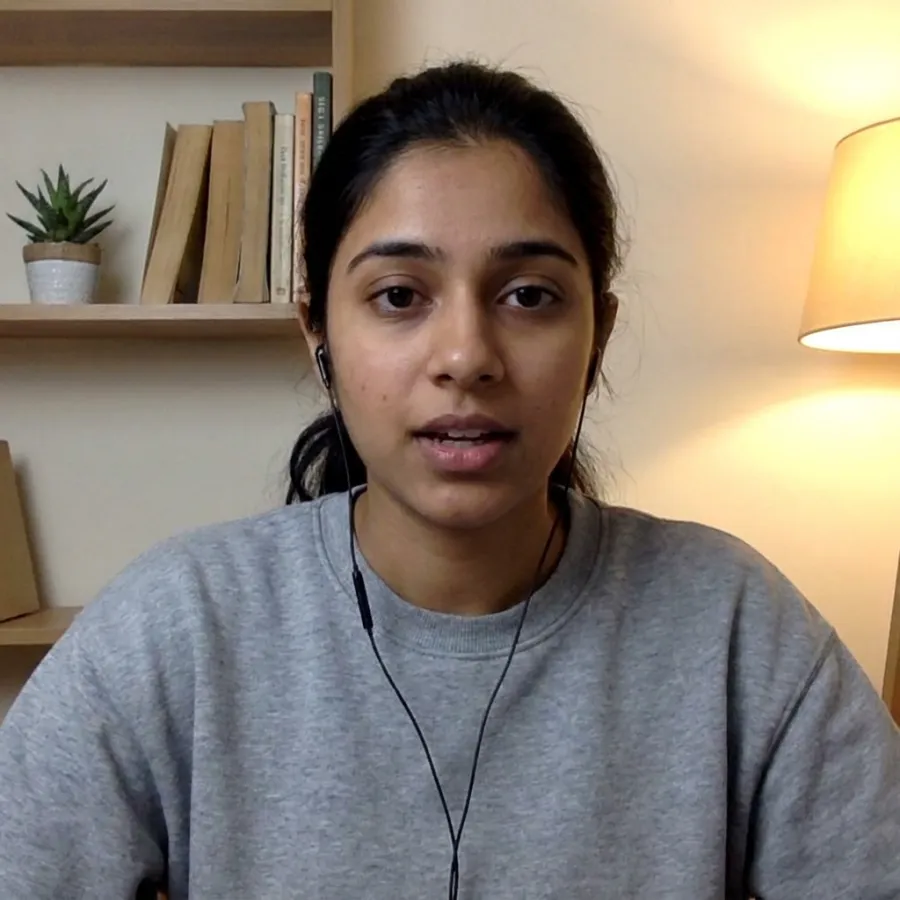
Webcams handle fabrics and colors differently from the human eye. Tight pinstripes, tiny checks, and herringbone weaves trigger a digital shimmer called a moire effect on Zoom and Microsoft Teams. Solid, matte fabrics in mid-tone colors look sharpest. Match your shirt color against your wall: if you sit in front of a white wall, wear navy, forest green, maroon, or charcoal so you do not wash out, and if your room has dark bookshelves behind you, wear a lighter blue, cream, or soft gray top.
Pair your outfit check with your Oxbridge online interview tech setup the day before. Both Cambridge and Hughes Hall publish clear equipment lists for remote candidates, including extra writing tools for problem-solving courses. If you are eligible for Free School Meals and have an online Cambridge interview, the university states you can contact your College for help accessing suitable technology.
- Quiet, distraction-free room: Cambridge and Hughes Hall both advise picking a quiet space where family members, pets, or school bells will not interrupt you.
- Charged device, webcam, microphone, and internet check: plug your laptop in for a full battery and test audio and video on the exact platform named in your invitation.
- Photo ID on the desk: Hughes Hall lists photo ID as required for all online applicants, so keep your passport or driver's license within arm's reach.
- Pen, blank paper, or tablet and stylus: Cambridge and Hughes Hall note that Science and Mathematics applicants often share rough workings, using either a stylus and tablet on a shared whiteboard or plain pen and paper held up to the camera.
- Lighting and glasses check: sit facing a window or soft lamp rather than putting a bright window behind your head, and tilt your screen slightly downward if you wear glasses to cut lens glare.
- College phone number and email written on paper: Cambridge and Hughes Hall tell applicants to keep admissions office contact details on hand so you can call right away if your internet drops.
In-person interviews: shoes, winter layers and campus transit
Most UK university interviews fall in the coldest, wettest months of the year. Cambridge holds its main interview period from 7 December to 18 December 2026, followed by winter pool interviews around mid to late January 2027, and mature applicant interviews from mid-March to early April (at Hughes Hall, January deadline interviews run from 23 March to 10 April 2026, excluding bank holidays). Traveling in December or January means dressing for rain, wind, and radiator heat on the same day.
Historic college staircases, gravel paths, and large modern campuses involve more walking than applicants expect. UCAS recommends arriving on campus at least 30 minutes before your interview starts so you can find the building without rushing or arriving flustered. Choose flat, closed-toe shoes with grip, such as broken-in leather lace-ups, loafers, Chelsea boots, or smart flats, and skip suede if rain is forecast.
Build your outfit in removable layers. Wear a breathable cotton shirt or blouse under a jumper, plus a waterproof winter coat and compact umbrella. You can leave your wet coat on a peg inside the waiting room or tutor's study and still look neat, and if an old radiator makes the room stuffy, you can take your sweater off before sitting down. For UK students eligible for Free School Meals attending in-person Cambridge interviews, travel support is available and Colleges may also provide accommodation and meals.
- Pack spare tights, clean socks, and a small comb or tissues in your bag in case of heavy rain.
- Put your phone completely on silent before entering the waiting area, as Cambridge advises for all in-person sessions.
- If carrying an art or design portfolio, use a zipped waterproof case with a shoulder strap so your hands stay free for umbrellas and heavy doors.
How to build an interview outfit from clothes you already own
You never need to buy a new wardrobe for a 30-minute admissions interview. Tutors come from normal academic offices where sweaters, shirts, and chinos are everyday wear, and nobody knows or cares whether your shirt came from a sixth-form uniform rack, a parent's wardrobe, or a local charity shop.
Start by auditing what you already wear to sixth form, work experience, or family dinners. Plain school trousers, a dark skirt, or clean chinos paired with an ironed white or light-blue collared shirt and a plain jumper already meet every UCAS smart-casual guideline. Removing a school tie and blazer with a crest immediately turns sixth-form trousers and a shirt into standard adult smart-casual wear.
If you need to fill one gap, look for a single plain crew-neck or V-neck sweater in navy, gray, or black at a supermarket clothing aisle or charity shop. Wash, dry, and press the outfit two days ahead, check for loose threads or pet hair under bright daylight, and hang it up ready so your morning stays calm.
Day-before and on-the-day preparation checklist
Sorting out your clothes and desk the afternoon before frees up your head for academic thinking. Once you have worked through your four-week Oxbridge preparation plan and reread your personal statement and submitted essays, treat interview morning as a routine checklist.
During the session itself, clothing and posture work together. Whether your interview is in person or online, UCAS advises candidates not to slouch in the chair, yawn, or fold their arms, and instead to sit up straight, stay alert, and make eye contact. Sitting with both feet flat on the floor opens your chest so your voice sounds steady and clear.
Finally, know the rule for sudden illness or technical emergencies. Cambridge warns that if you fall ill or experience significant issues on the day, you must contact your College admissions office before your interview starts, because illness, injury, or personal circumstances reported after the interview will not usually be taken into account.
- Afternoon before: iron or steam your top and trousers, check buttons and seams, and lay out shoes and socks.
- Afternoon before (online): test webcam framing at eye level in the exact shirt you plan to wear, charge your laptop and stylus, and place photo ID and blank paper on the desk.
- Afternoon before (in person): check the campus map, confirm train or bus times to arrive at least 30 minutes early, and pack your College contact details and umbrella.
Practice example
Why have you chosen this course, and what is one topic you explored outside school that changed how you think about it? (Question in this style written by our team.)
Example answer written by our team. The applicant is invented. I chose History because school lessons taught me to compare primary sources, yet reading outside class showed me how much our view of an era depends on what never got written down. Last autumn I read a study of parish poor-relief ledgers in seventeenth-century Norfolk after covering the Stuart monarchy at A level. In class we focused on parliamentary statutes and royal proclamations, which made state policy look tidy and top-down. Looking at transcriptions of local churchwardens' accounts changed my mind: tiny villages bent the rules year by year depending on harvest failures and grain transport costs. It made me realize I want to study economic and social history alongside political texts at university, especially how ordinary households adapted when central laws clashed with local survival.
Instead of repeating generic praise for the subject, the speaker names one specific piece of independent reading and pinpoints the exact shift in their thinking. That gives the interviewers a concrete historical debate to probe with follow-up questions.
Related guides
- what to expect at Cambridge
- Oxford interview dates by subject
- Oxbridge online interview tech setup
- four-week Oxbridge preparation plan
Frequently asked questions
Do I need to wear a suit to a UK university interview?
No. UCAS states that you might not need a suit, and that smart trousers or a skirt paired with a shirt or blouse will show you are taking the interview seriously while keeping you comfortable.
What does Cambridge say to wear to an interview?
The University of Cambridge official interview preparation page tells applicants you can wear whatever you are comfortable in. Tutors treat the interview as an academic conversation to assess how you think and solve problems rather than how formally you dress.
Should I wear smart trousers for an online Zoom or Teams university interview?
Yes. UCAS notes that universities still expect you to look presentable in smart or smart-casual clothes on video interviews, and wearing proper trousers or a skirt protects you if you need to stand up to get your photo ID, plug in a charger, or adjust a window blind.
What colors and patterns look best on a webcam interview?
Solid, matte tops in mid-tone colors such as navy, teal, burgundy, olive, or soft gray photograph cleanly without glare. Avoid fine pinstripes or micro-checks that create shimmering moire patterns on screen, and pick a shade that contrasts clearly with the wall behind you.
What must I have on my desk for an online Cambridge interview?
Cambridge and Hughes Hall advise having a fully charged device with a tested webcam and microphone, a good internet connection, photo ID, a pen and paper (plus a tablet and stylus if requested for Science or Mathematics workings), and the College admissions phone number and email.
Related guides
- Art Portfolio for University Interview: Rules, Scoring, and How to Present
- Chemical engineering interview questions for university admissions
- Computer Science University Interview Questions and Formats
- Electrical Engineering University Interview Questions and Preparation Guide
- Film Production University Interview Questions: Portfolio, Crew, and Course Fit
- All admissions interview guides
Sources
Checked 13 November 2026.
- Preparing for your Cambridge interview - University of Cambridge
- What to expect at your Cambridge interview - University of Cambridge
- Application statistics - University of Cambridge
- Undergraduate Interviews - Hughes Hall, Cambridge
- Undergraduate interview invitations - UCAS
- How to prepare for a uni interview - UCAS
AdmitMock is not affiliated with Oxford, Cambridge or any other university.